Putting a house on the market is a sequence of decisions, but buyers will experience it in seconds. They will see the first image, scan the rooms, compare the setting and decide whether the property deserves a closer look. That makes the preparation before your marketing day worth treating as part of the sale, not an afterthought.
This guide focuses on the practical work that helps a home look clear, cared for and easy to picture. It is not legal or tax advice. Your solicitor and estate agent should guide the sale itself; this is the presentation checklist that helps the marketing do its job once the property is ready to be seen.
Quick start
Selling a house in Ireland: 7 things to do before launch
- Agree the sale plan, likely buyer and launch timing with your estate agent.
- Check the BER and raise any paperwork, planning or boundary questions early.
- Prioritise small repairs that make the home feel cared for and easy to use.
- Clear and prepare the kitchen, living spaces, bedrooms, bathrooms and storage.
- Make the entrance, garden, approach and outdoor areas easy to understand.
- Schedule photography close enough to launch that the property still matches the listing.
- Set a simple reset routine so the house is ready for viewings as well as photos.
Start with the sale plan, not the photo list
Good marketing is most useful when it reflects a clear sale plan. Before moving furniture or buying a new lamp, speak with your estate agent about the likely buyer, the features that distinguish the property and the point at which the listing should go live. A family home near a school, a coastal cottage, a town-centre apartment and a rural property each need a different emphasis.
Ask which rooms, views and practical features should lead the story. That conversation stops you from preparing every corner with equal effort when a handful of details will make the real difference. It also keeps the visuals honest. The objective is not to make the house look like someone else lives there; it is to make the value already present easier to see.
Choose your property service providers carefully. The PSRA register of licensed property service providers is a useful place to verify an estate agent or auctioneer. Once the plan is set, book the visual work close enough to launch that the garden, rooms and seasonal light still match what buyers will see at a viewing.
Deal with the distractions buyers notice first
You do not need to renovate a whole house to prepare it for sale. Start by walking through it slowly, as if you are visiting for the first time. Look for the small things that quietly suggest unfinished work: loose handles, sticking doors, cracked switch plates, a blown bulb, tired sealant, scuffed paint or a gate that does not close properly. These are often inexpensive fixes, but they can distract from the rooms you want buyers to remember.
Then separate necessary maintenance from expensive improvements. Repairs that make a home feel looked after are usually worth prioritising. A large kitchen refit or a full redesign may be worthwhile for some sellers, but it should be a decision based on timing, budget and local demand, not a reflex before every sale. Your estate agent can help you judge the likely return in your market.
Collect the practical information early as well. For most homes offered for sale, the BER must be shown in the advertising. Checking that detail before the marketing is designed avoids a last-minute scramble. If any paperwork, planning question or boundary detail needs attention, raise it with the right professional early rather than trying to solve it during a photo appointment.
Use light, scale and flow to your advantage
A room can be perfectly tidy and still feel uninviting if it is dark, cramped or difficult to read. Before photography, stand at the doorway of each important room and notice the first thing your eye lands on. Is it a feature window, a fireplace, a dining area or a pile of things waiting to be dealt with? Move the latter before you start adding anything decorative.
Natural light is usually the most flattering starting point. Clean the inside of windows, open curtains fully and lift blinds high enough that they do not cut across the glass. Trim back any plant or hedge that blocks a useful window where practical. If the day is grey, do not panic: soft overcast light can be excellent for interiors because it is even and gentle. Your photographer will work with the conditions, but clear windows and uncluttered sills give them more to work with.
Scale is just as important. A large sofa pushed into the middle of a modest room can make the floor area disappear, while a narrow route between a kitchen island and a table can make a generous kitchen feel inconvenient. Take out the occasional chair, side table or oversized plant where it improves the route through the space. The goal is not to make rooms look empty. It is to let a buyer see where their own furniture, routines and guests might fit.
Finally, think about flow between rooms. If a kitchen opens to a dining space, or a sitting room opens to a garden, prepare both spaces at the same time. A photograph may show only one room, but buyers will infer the relationship between them from the doors, windows and sight lines. When one room is calm and the next is cluttered, the story breaks.
Prepare the rooms buyers will compare most closely
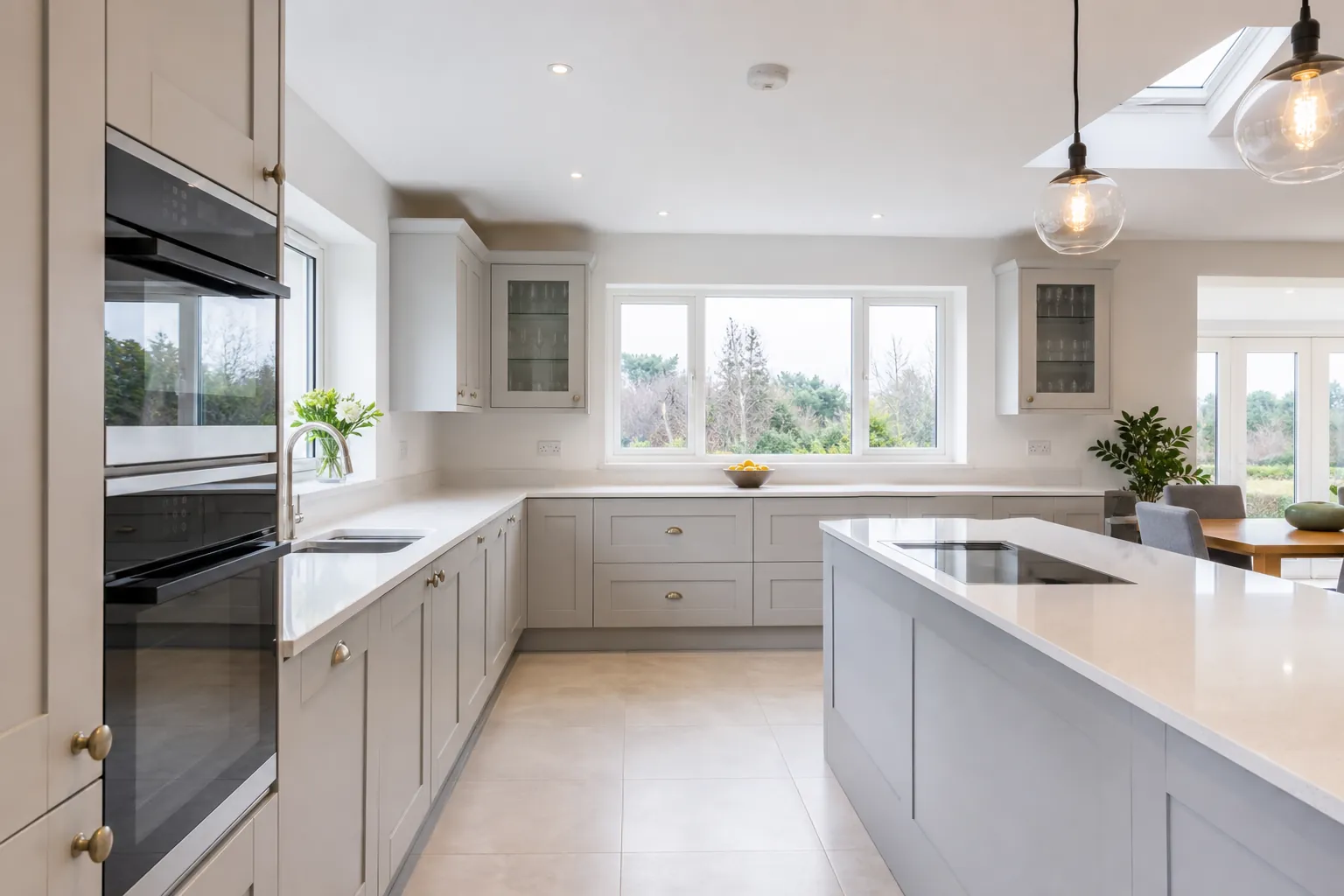
Most viewers will move quickly through a listing, so the rooms carrying the daily life of the home need to read instantly. Kitchens, living spaces, main bedrooms, bathrooms and outdoor areas usually do the most work. Prepare them one at a time rather than trying to make the whole house perfect at once.
Kitchen
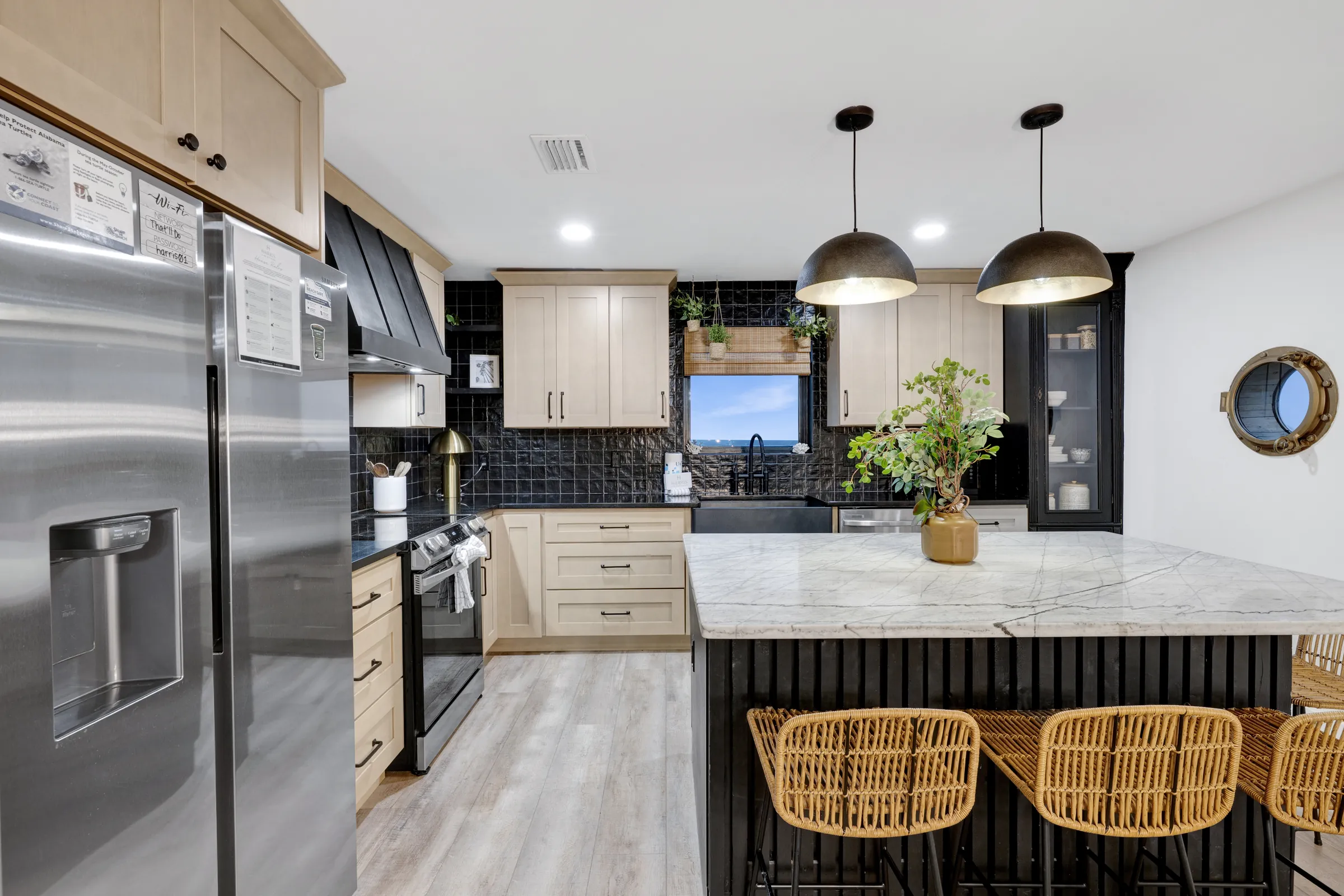
Clear the worktops until the room feels spacious, then leave only a few purposeful items. Put away dish racks, cleaning bottles, pet bowls, fridge magnets and bulky appliances unless they are built in. Clean sinks, taps, splashbacks and the front of appliances. A fresh tea towel, a simple bowl of fruit or a vase of greenery can add warmth, but the surfaces should still look usable.
Living spaces
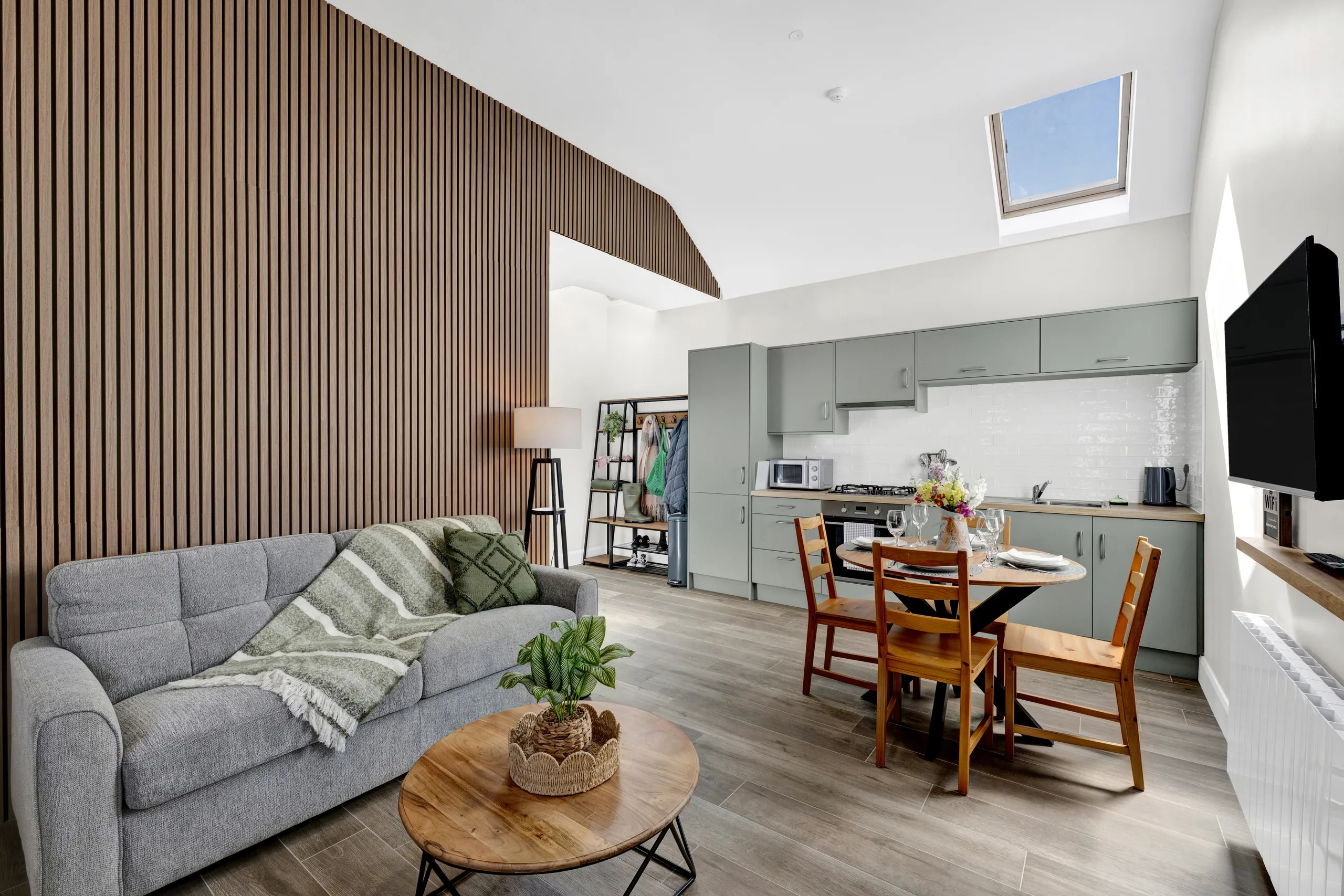
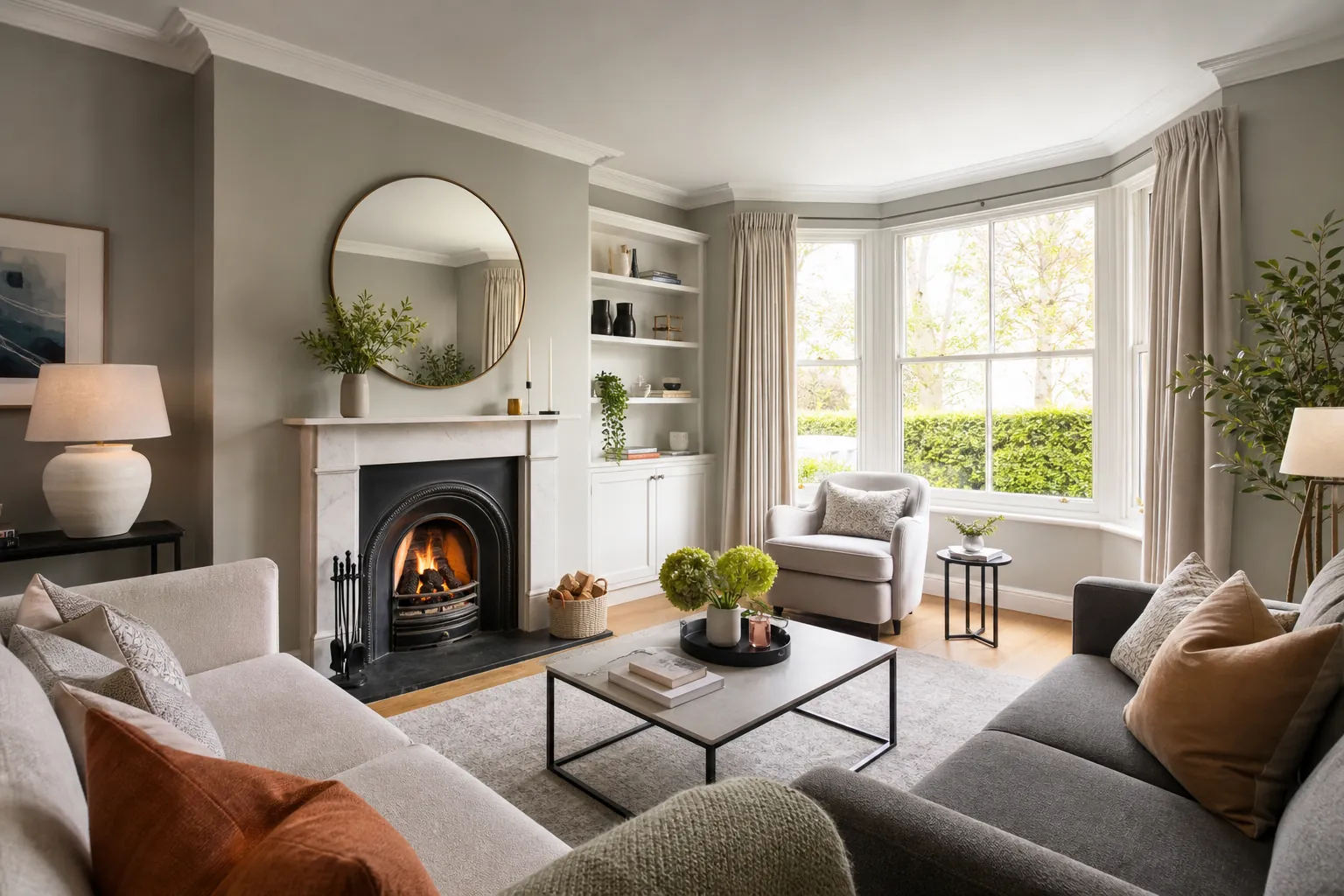
Remove overflow furniture and anything that interrupts a natural route through the room. Straighten cushions, hide charging cables and pare back shelves. If a room has a fireplace, view, bay window or connection to the garden, make sure it is visible from the places a photographer is likely to stand. That is the difference between a room that looks furnished and one that communicates why it is pleasant to live in.
Bathrooms
Bathrooms benefit from the strictest edit. Store toiletries, toothbrushes, bath toys, bins and laundry. Polish mirrors and glass, close the toilet lid and use fresh, simple towels. Buyers are not judging whether the room looks hotel-like; they are checking whether it feels clean, bright and well maintained.
Make bedrooms feel calm, not anonymous
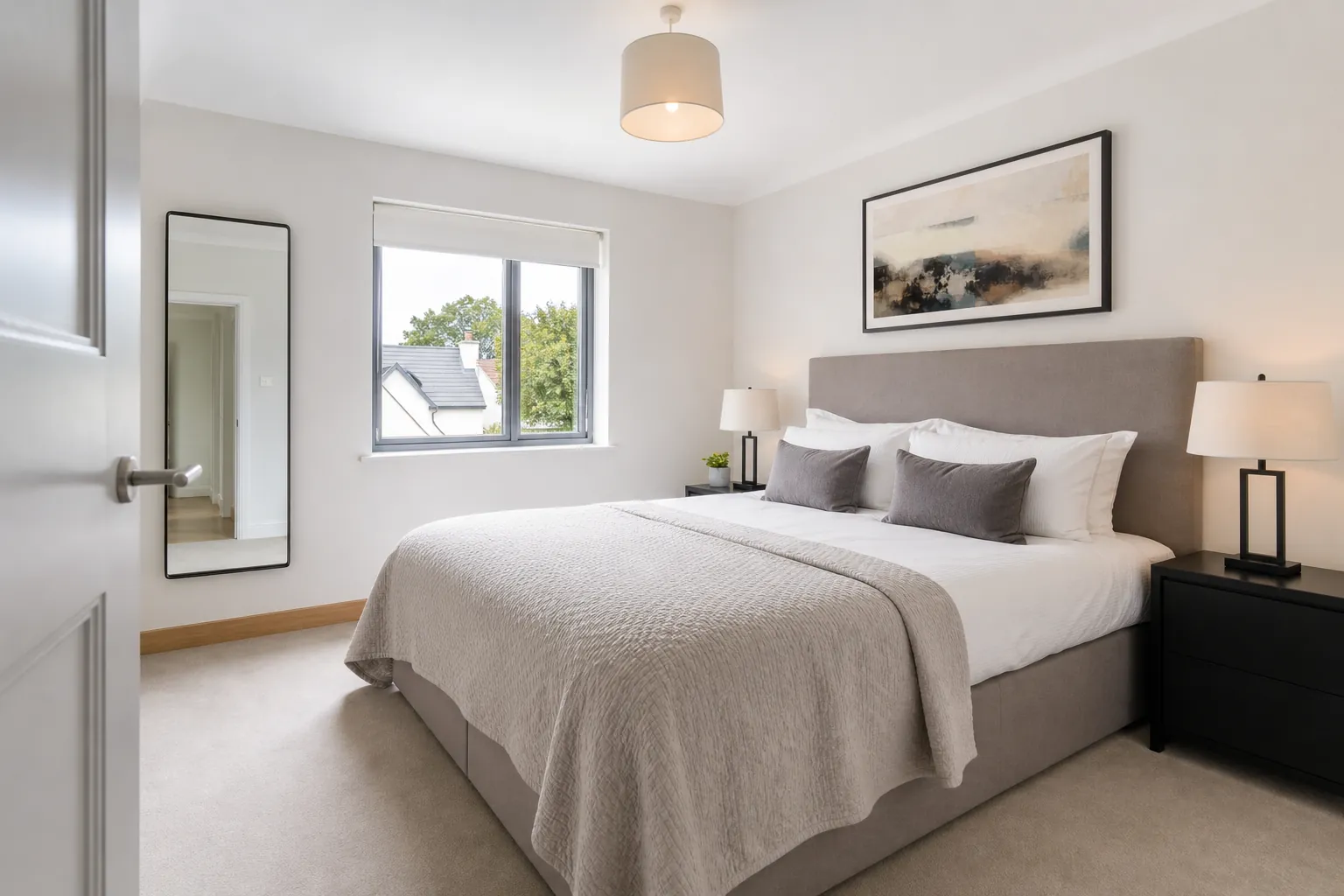
Bedrooms should show their proportions and purpose without becoming overly personal. Make beds neatly with bedding that sits well on camera, clear bedside surfaces and put everyday clothing away. Family photos, medals, collections and bright personal artwork can all make a room feel smaller because they give the eye too many places to stop.
That does not mean stripping every room bare. A chair, a lamp, one or two books and a useful mirror can make a bedroom feel real. The useful test is whether the room still looks easy for a new owner to imagine using. Where a spare room is doing several jobs, decide which one matters most to your likely buyer and stage it around that purpose.
Make storage look useful, not overloaded
Storage is valuable, but photographs should show capacity rather than chaos. Buyers expect wardrobes, utility rooms, sheds and cupboards to hold everyday things. What makes a space look difficult is when it appears to be holding everything the house cannot accommodate elsewhere.
Start by removing the items that are obviously temporary: flattened boxes, bags for donation, old paint tins, broken appliances and seasonal clutter that has not found a home. Then group what remains by purpose. A utility room can look organised with a clear worktop and a few neatly placed essentials; it does not need to look empty. In wardrobes, leave enough space around hanging clothes and shelves that the storage itself is visible.
Do not feel obliged to photograph every storage cupboard. Your estate agent and photographer can decide which ones contribute to the story. A generous pantry, walk-in wardrobe or well-designed utility room may be worth showing. A packed under-stairs cupboard is usually better left closed. The same rule applies to garages and outbuildings: clear a path, remove rubbish and let the practical value of the space show without trying to turn it into a showroom.
Give empty or awkward rooms a clear role
Vacant homes and half-used rooms can be harder to understand online than in person. An empty room may look smaller than it is, while a home office that has become a storage area can leave buyers unsure how the space functions. Start with the simplest real-world use: office, nursery, dining room, guest room, reading area or storage. Clear the rest away so that use is obvious.
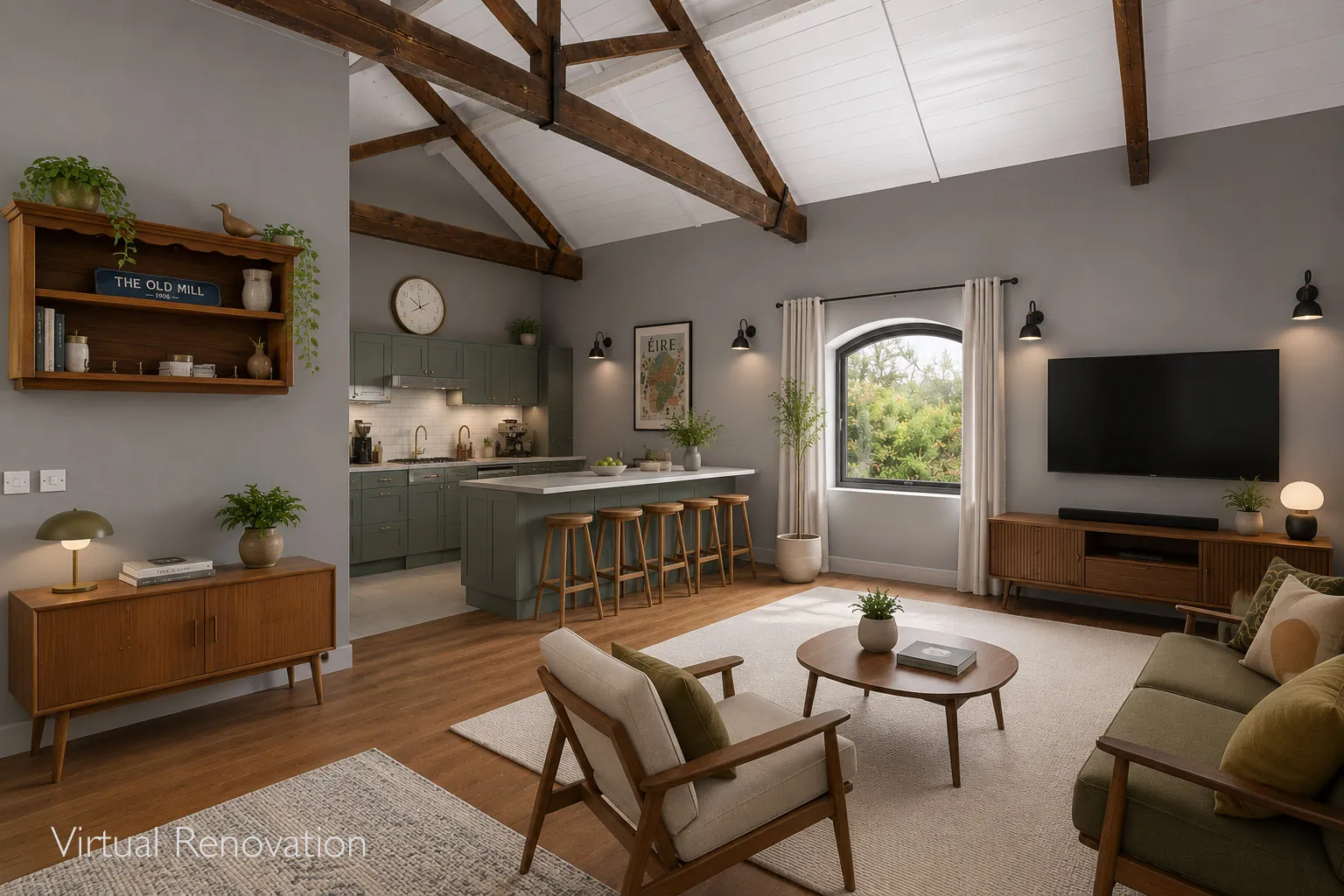
When furniture is unavailable or the existing layout is working against the room, tasteful virtual staging can help buyers see scale and possibility. It should complement the genuine room, not conceal a problem. Keep the finishes, windows and proportions accurate, and let your agent decide how to present staged images alongside the original space.
For larger properties, a Matterport 3D tour can be useful because it lets prospective buyers move through the layout at their own pace. It does not replace good photography. It gives the photography a second job: drawing viewers in, then helping them understand the property more fully once they arrive.
Do not leave the exterior until the end
The outside of a home often sets the standard for everything that follows. Walk from the road or driveway to the front door and remove the things that do not belong in the story: bins, hoses, toys, broken pots, parked cars, loose tools and overgrown plants that block windows or paths. Sweep the approach, straighten outdoor furniture and make sure the door area is clean and welcoming.
Look beyond the front elevation too. Rear gardens, balconies, views, outbuildings, parking, gates and nearby amenities can all help a buyer understand the setting. If the location or land is a central strength, discuss aerial photography and video options with your marketing team. A wider view should add useful context, not simply make the campaign feel more elaborate.
Prepare for viewings while you prepare for photos
The best photography preparation is rarely wasted after the camera leaves. In the days that follow, buyers will arrive with the images already in mind. Keeping the same standard through viewings makes the listing feel credible and protects the effort you have put into the launch.
Create a simple reset routine that takes ten or fifteen minutes: clear the kitchen, open curtains, air the rooms, put away laundry, straighten the entrance and check the bathroom. Keep the same storage box or cupboard for everyday items that tend to collect on surfaces. That routine is much easier than re-staging the property from scratch whenever your agent calls.
Think about the practical details a visitor experiences in person. Make sure the approach is safe and easy to follow, paths are clear, gates open, exterior lighting works and pets are settled elsewhere if possible. If parking is limited or there is a particular route to the property, give your agent the information they need to prepare viewers. This is not about controlling every impression. It is about avoiding avoidable friction once someone has made the effort to visit.
For occupied homes, agree a viewing approach that works around work, school and family life. A short period of availability when the house can stay ready is often more manageable than trying to accommodate every request. Your agent can advise on the right balance for the local market and the level of interest.

Plan the photography day so the home stays ready
A good preparation list is only helpful if it holds together when the doorbell rings. Set aside one cupboard, car boot or box for the items you clear from surfaces. That gives you somewhere to put the last-minute things that tend to reappear: coats, bags, pet supplies, charging leads, remotes and cleaning products.
Open curtains and blinds, but keep an eye on glare. Turn on practical lamps if your photographer recommends it, and replace visibly different bulbs in the same room so the colour of the light feels consistent. Keep pets, people and vehicles out of the frames where possible. If children or pets will be home, plan an outing during the appointment; it makes the session calmer for everyone.
Trust the photographer to identify the strongest angles once the property is prepared. A professional property photography approach is not just about documenting every wall. It is about choosing the images that explain flow, light, finish and setting without confusing the viewer. For listings where movement and atmosphere matter, cinematic video can add another layer of context.
Keep the marketing true to the home
Presentation should clarify the property, not overpromise. Avoid heavy filters, misleading angles or styling that hides a material issue. Buyers will see the real house at a viewing, and a campaign that feels substantially different in person can work against the confidence you are trying to build.
That is especially important with virtual staging and edited images. Use them to make a vacant space easier to understand, not to invent features, alter room dimensions or conceal defects. When an image includes a staged version of a room, make sure the estate agent presents it appropriately alongside the real space. Clear marketing attracts a better-informed enquiry and makes the eventual viewing more productive.
The same principle applies to copy. The strongest listing descriptions point to features that can be seen, felt or verified: natural light, a south-facing garden, a flexible room, a recent upgrade, a clear commute or an established setting. Let your agent lead on the selling language, while the images provide the evidence that gives those details weight.
Know what not to spend time on
Preparation has a point of diminishing returns. Once the home is clean, functional and easy to understand, small obsessive changes can take time away from the work that matters. Do not delay the launch because a room is not perfectly styled, a garden does not look like a catalogue or every surface has not been replaced.
Be careful with projects that are hard to reverse. Painting every wall white, removing useful furniture or buying costly decorative pieces can make a home feel less like itself. Buyers respond to a property that feels cared for and well used; they do not need a replica show home. A restrained edit is usually more convincing than a full makeover completed under pressure.
It is also wise to avoid hiding issues that should be addressed openly. A cover thrown over a worn sofa is one thing. Concealing a leak, a damaged floor or a maintenance problem is another. Your agent and solicitor can advise on the right way to handle questions around the property. The marketing should support a clear sale, not create a surprise at the viewing or later in the process.
When you are unsure whether a job is worthwhile, ask two questions. Will it make the home easier to understand in photographs and viewings? Will it help a serious buyer feel more confident about the property? If the answer to both is no, it can probably wait. Put that energy into the rooms, approach and information that shape the buyer’s first impression.
Keep the timing realistic too. A property often looks best after a calm, planned preparation day rather than a week of rushed changes. Schedule cleaning, small repairs and the photography appointment in an order that gives each job time to settle. If new paint needs to dry, garden work needs clearing or a room needs furniture removed, leave space between those tasks and the marketing day.
That approach is easier on everyone involved. It lets you make decisions with your agent, gives the photographer access to a prepared home and makes it more likely that the launch images will still reflect the property when the first serious viewers arrive in person.
Build a consistent marketing package
The listing works harder when every element feels like it belongs to the same property. Photography should match the wording, video should reinforce the strongest features and any supporting material should make the next step obvious. That is particularly important when buyers are first meeting the home on a property portal or social feed, where attention is limited.
For a distinctive property, a dedicated listing website can give the story more room than a standard portal page. Avera Design International’s campaign media kits and property websites bring photography, video, tours and key details into one place, so interested buyers can explore the property without losing the thread. The right package depends on the property and the sales plan; more assets are only valuable when they help a buyer understand something important.
The final walk-through
Before the camera arrives
- Clear counters, tables, floors and window ledges.
- Put away personal items, pet supplies, bins and cables.
- Open blinds, check bulbs and clean reflective surfaces.
- Make beds, refresh towels and close doors that do not need to be open.
- Sweep the entrance, garden paths and outdoor living areas.
- Keep one hidden place ready for last-minute items.
- Check that the rooms you want to lead with are easy to access.
How Avera Design International Helps Bring the Plan Together
When the house is ready, the job is to show it with the care it deserves. Avera Design International combines property photography, film, 3D tours, virtual staging and campaign-ready media so the visual side of a listing is coordinated from the start. The aim is straightforward: make the setting, space and potential easier for the right buyer to recognise.
For homes across Ireland, the team can help you and your estate agent decide which combination of media suits the property, then create the material needed for a confident launch. Request a shoot when you are ready to plan the next listing.
Frequently asked questions
Do I need a BER certificate before selling a house in Ireland?
In most cases, yes. The Sustainable Energy Authority of Ireland says a BER certificate is compulsory for homes offered for sale or rent. Check the current certificate early, and speak to your estate agent or BER assessor if you are unsure how it should appear in the listing.
Should I renovate before putting my house on the market?
Do the work that removes obvious distractions, protects the property and makes the home easier to understand. Major renovations are a separate financial decision. Before spending heavily, ask your estate agent which changes buyers in your area will notice and value.
How clean does a house need to be for property photos?
Aim for clean enough that the viewer notices the room, not the cleaning job. Clear surfaces, polished mirrors, fresh linens, clean floors and tidy outdoor areas make the biggest difference. You do not need to erase every sign of life, but personal belongings and visual clutter should not take over the frame.
Can virtual staging help when a room is empty?
Yes. When a room is vacant or its current furniture makes its purpose hard to read, considered virtual staging can show scale, layout and potential without pretending the furniture comes with the property. It works best when the result remains tasteful and clearly supports the real room.